
The Attack on the Image: The Collapse of Cinematic Space
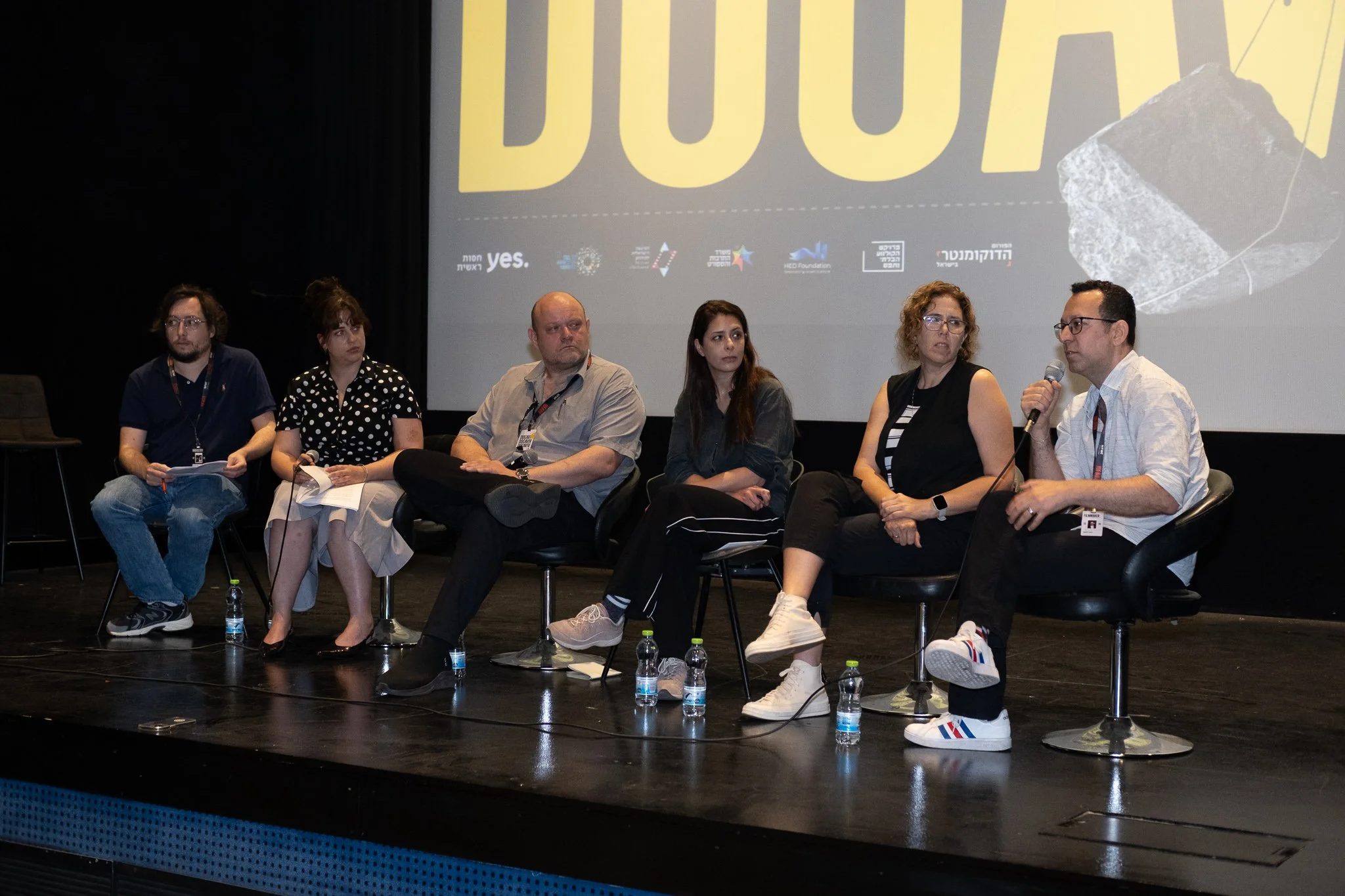
Photo © Eran Peretz
PUBLIC PANEL DISCUSSION
31 May 2026 | 11:50 A.M.
Tel Aviv Cinematheque – Hall 4
We remember history through the audiovisual images that represent it. Those images do more than describe reality—they define its boundaries, organize it, and give it a logic that can be remembered, reconstructed, and shared.
In Israel, the word “Holocaust” brings to mind frozen and darkened forests, rows of barracks, barbed wire fences, and plumes of smoke rising from a chimney. The Holocaust became fixed in our memory primarily through cinematic and cultural images collected, processed, and released into the world over the years. Three years after the October 7 massacre, we in Israel are slowly coming to understand that this was the most defining event to have happened to the Jewish people since the Holocaust. But unlike the Holocaust, that dark Saturday was documented on an unprecedented scale: security cameras, GoPros strapped to the bodies of Nukhba terrorists, phone footage from both sides of the fence—an eruption of instantly-disseminated images, unmediated and unprocessed. In this sense, October 7 was also a carefully planned assault on the audiovisual image itself. Accompanied by screened clips, the discussion panel will examine the different modes of documentation surrounding both events, and ask what happens when an image is created not in distant hindsight, but from within the event itself—and what the audiovisual language will look like in a reality where documentation arrives before there is a story in place to organize it.
Moderators: Shira Havron and Shani Kiniso
Participants: Ronit Ifergan, Assaf Lapid, Michal Lavi, and “Holofiction” director Michal Kosakowski
Photo © Eran Peretz